By the time he was in his 40’s, John James Audubon was wealthy and world famous. But not before having to overcome lots of adversity.
Born Jean Jacques Audubon in the French colony of Sainte Domingue (now Haiti), he was the illegitimate child of a chambermaid and a French sea captain/plantation-owner. His mother died when he was only a few months old and at age 6 Jean was taken to France, where he was adopted and raised by his father’s wife.
Jean’s father had hoped the boy would become a naval officer, following in his footsteps, but Jean was a failure at military and naval training. So, to keep him from being conscripted into Napoleon’s army, Jean’s father acquired forged identity papers for the boy and sent him to America. On the way over Jean adopted the anglicized version of his name: John James Audubon.
In America, after surviving a bout of yellow fever, John met and fell in love with Lucy Bakewell, eventually marrying her.
John was a brilliant and gifted man, but he failed repeatedly in business. By 1819 he was bankrupt and in debtor’s prison. Lucy supported the family by working as a teacher.
As we all know now, John’s true calling was as an artist and a naturalist. He really did try to make a living for his family as he pursued his passion. He tried to be a teacher/tutor on plantations in the deep South for a long while. For nearly 15 years he had traveled around America, collecting and painting birds, while trying in vain to establish himself professionally.
Finally, in 1826, when John was 41 years old, his wife encouraged (and paid for) him to go to Europe to try to find a publisher for his collection of drawings. And there he became a sensation. His work was immensely popular, he had audiences with royalty, and his book The Birds of America became a smash hit. America was not quite ready to see all of its natural world painted in pictures but Europe and especially England were enthralled with his work. He is remembered today as one of the greatest naturalists and nature artists in history.
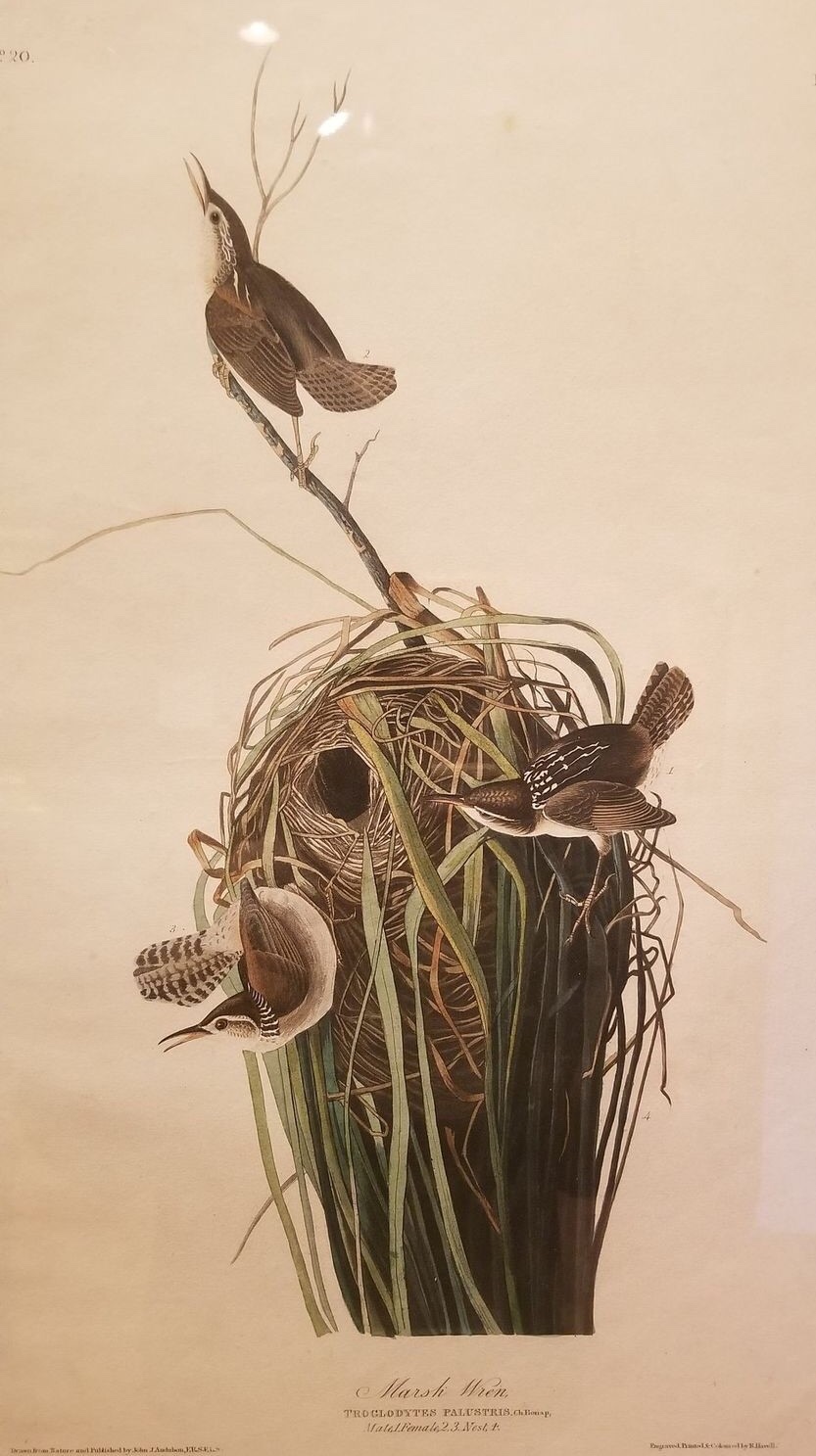
The image is his drawing “Marsh Wren,” which is in the Maier Museum of Art at Randolph College in Lynchburg, Virginia.
Source: A Daily Dose of History – https://bit.ly/3FlKNTb

 Rabbit Hole Truth’s